



Making a person interface that visualizes a real-world construction — just like the Thirty Meter Telescope’s mirror — would possibly look like a activity that calls for deep information of geometry, D3.js, and SVG graphics. However with a Massive Language Mannequin (LLM) like Claude or ChatGPT, you need not know every thing upfront.
This text paperwork a journey in constructing a fancy, interactive UI with no prior expertise in D3.js or UI improvement generally.
The work was accomplished as a part of constructing a prototype for an operational person interface for the telescope’s major mirror, designed to point out real-time standing of mirror segments.
It highlights how LLMs assist you “get on with it”, providing you with a working prototype
even whenever you’re unfamiliar with the underlying tech.
Extra importantly, it exhibits how iterative prompting — refining your requests step-by-step —
leads not solely to the correct code but additionally to a clearer understanding
of what you are attempting to construct.
The Aim
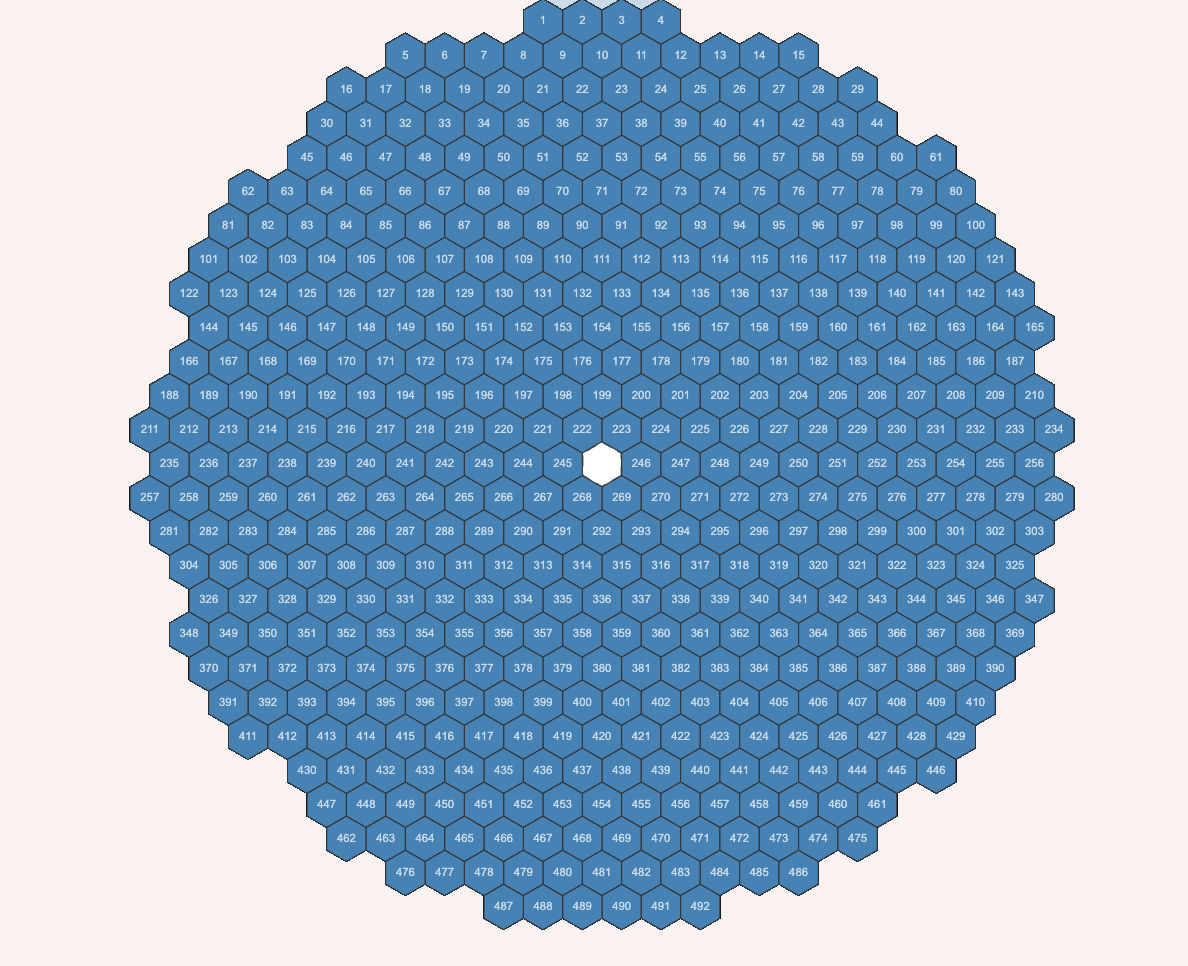
We wished to create an HTML-based visualization of the Thirty Meter Telescope’s major mirror, composed of 492 hexagonal segments organized symmetrically in a round sample.
We started with a high-level immediate that described the construction, however quickly realized that to achieve my purpose, I might have to information the AI step-by-step.
Step 1: The Preliminary Immediate
“I need to create an HTML view of the Thirty Meter Telescope’s honeycomb mirror.
Attempt to generate an HTML and CSS primarily based UI for this mirror, which consists of 492 hexagonal segments organized in a round sample.
Total construction is of a honeycomb. The construction must be symmetric.
For instance the variety of hexagons within the first row must be identical within the final row.
The variety of hexagons within the second row must be identical because the one within the second final row, and many others.”
Claude gave it a shot — however the end result wasn’t what I had in thoughts. The structure was blocky and never fairly symmetric. That is after I determined to take a step-by-step method.
Step 2: Drawing One Hexagon
“This isn’t what I would like… Let’s do it step-by-step.”
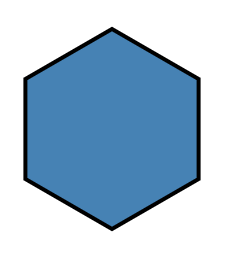
“Let’s draw one hexagon with flat edge vertical. The hexagon ought to have all sides of identical size.”
“Let’s use d3.js and draw svg.”
“Let’s draw just one hexagon with d3.”
Claude generated clear D3 code to attract a single hexagon with the right orientation and geometry. It labored — and gave me confidence within the constructing blocks.
Lesson: Begin small. Verify the inspiration works earlier than scaling complexity.
Step 3: Including a Second Hexagon
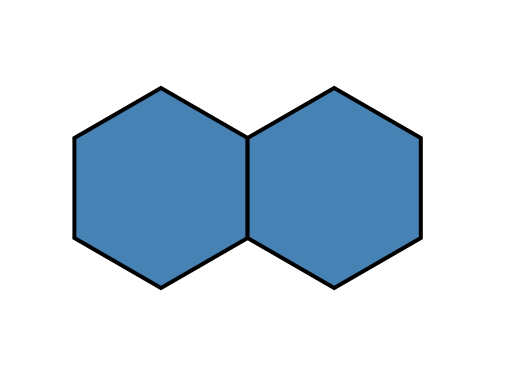
“Good… Now let’s add another hexagon subsequent to this one. It ought to share vertical edge with the primary hexagon.”
Claude adjusted the coordinates, putting the second hexagon adjoining to the primary by aligning their vertical edges. The structure logic was starting to emerge.
Step 4: Creating the Second Row
“Now let’s add another row.
The hexagons within the second row share vertical edges with one another much like the primary row.
The highest slanting edges of the hexagons within the second row must be shared with the underside slanting edges of the hexagons within the first row.
The variety of hexagons within the second row must be such that the primary row seems centrally positioned with the second row.”
Preliminary makes an attempt didn’t correctly align the slanting edges.
“Oops… this doesn’t share the slanting edges with the earlier row.”
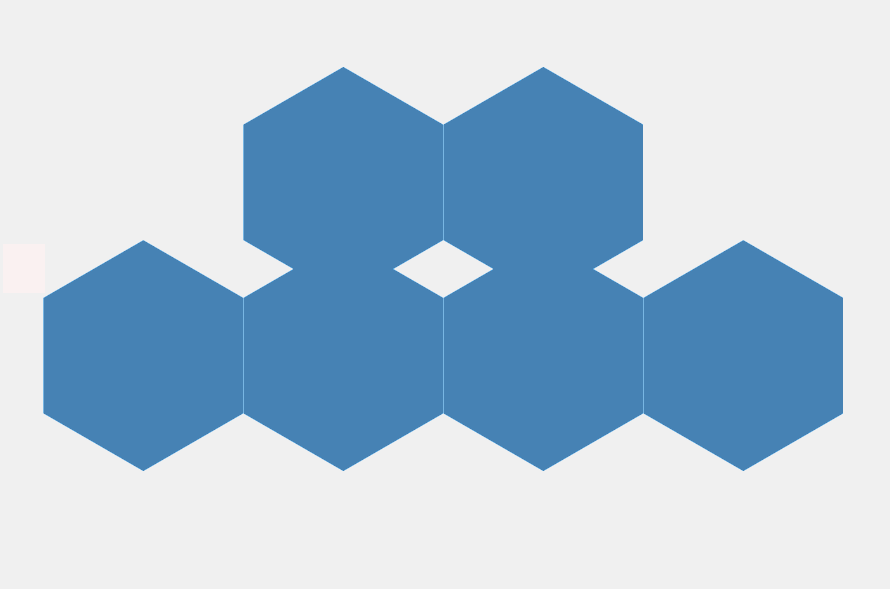
However ultimately, after clarifying spacing and offset logic, Claude received it proper.
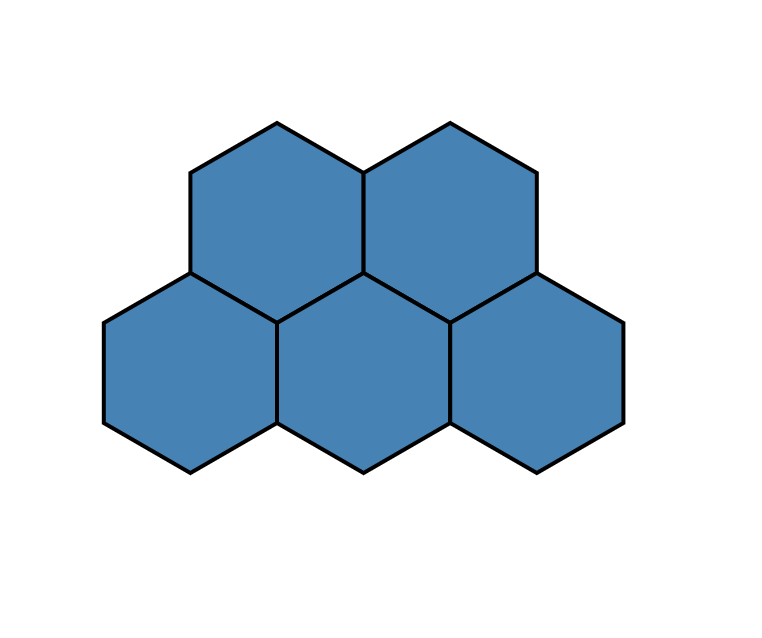
Lesson: Geometry-based layouts typically require a number of iterations with cautious visible inspection.
Step 5: Increasing right into a Symmetric Construction
“Now we have to create larger construction with extra hexagons organized in additional rows such that:
The general construction seems round like honeycomb.
The variety of hexagons within the rows goes on rising after which goes on lowering to kind a superbly symmetric construction.
The whole variety of hexagons must be 492 to match the TMT telescope.
We are able to have an empty hexagon (exhibiting empty house) precisely on the middle of the circle.”
Claude used a ring-based structure method to simulate round symmetry. However at first:
“This isn’t round however appears to be like extra like a hexagonal total view…”
Then I advised:
“Strive with solely 6 hexagons within the first and final row.”
This alteration improved symmetry and helped obtain a visually round structure. The variety of hexagons per row elevated after which decreased — precisely as desired.
Step 6: Tuning the Central Opening
“That is higher however we want a smaller opening on the middle.The black house on the middle is just too massive. It must be at most 1 or a couple of hexagons.”
By lowering the empty house and rebalancing the internal rings, we lastly received a well-packed, round construction with a small central hole — matching the TMT design.
Lesson: Use domain-specific constraints (like complete depend = 492) as guideposts for structure parameters.
Step 7: Including Numbering and Tooltips
“We need to have a quantity on every hexagonal section. They need to be numbered sequentially. The primary within the first row must be 1 and the final within the final row must be 492. Once we present the hexagonal section info on mouseover, we should always present the quantity as properly.”
Claude initially assigned numbers primarily based on ring index, not row order.
“You’re producing numbers primarily based on place within the ring… However the numbering must be row-based. So we should always someway map the rings to the row. For instance, Ring 13 section quantity 483 is in row 1 and must be numbered 1, and many others. Are you able to counsel a option to map segments from rings to rows this manner?”
As soon as this mapping was carried out, every thing fell into place:
- A round structure of 492 numbered segments
- A small central hole
- Tooltips exhibiting section metadata
- Visible symmetry from outer to internal rings
Reflections
This expertise taught me a number of key classes:
- LLMs assist you get on with it: Even with zero information of D3.js or SVG geometry, I may begin constructing instantly. The AI scaffolded the coding, and I realized via the method.
- Prompting is iterative: My first immediate wasn’t fallacious — it simply wasn’t particular sufficient. By reviewing the output at every step, clarified what I actually wished and refined my asks accordingly.
- LLMs unlock studying via constructing: In the long run, I did not simply get a working UI. I received an comprehensible codebase and a hands-on entry level into a brand new know-how. Constructing first and studying from it.
Conclusion
What began as a imprecise design concept become a functioning, symmetric, interactive visualization of the Thirty Meter Telescope’s mirror — constructed collaboratively with an LLM.
This expertise reaffirmed that prompt-driven improvement is not nearly producing code — it is about pondering via design, clarifying intent, and constructing your means into understanding.
When you’ve ever wished to discover a brand new know-how, construct a UI, or sort out a domain-specific visualization — do not wait to be taught all of it first.
Begin constructing with an LLM. You will be taught alongside the way in which.
